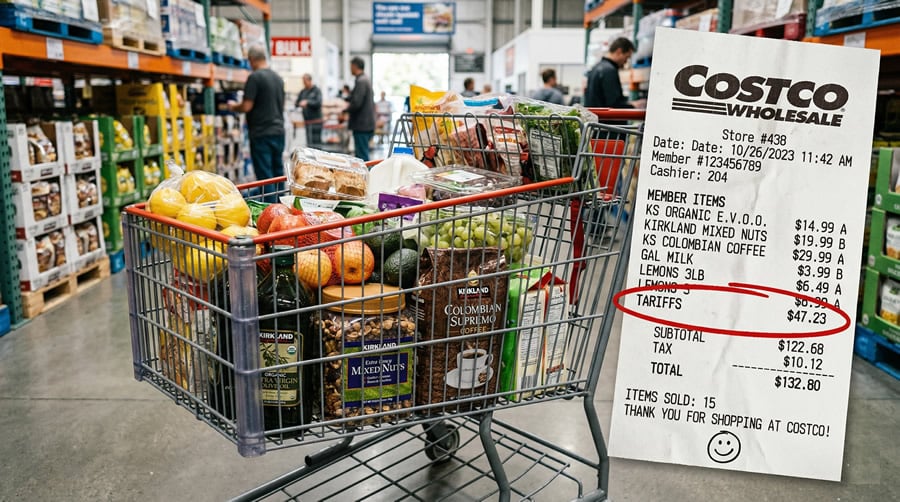
If you’ve noticed some of your Costco staples costing a bit more over the past year, you weren’t imagining things. Tariffs on imported goods drove up prices on everything from olive oil to mixed nuts to roasted seaweed snacks. Costco, like most major retailers, passed at least some of those costs along to members.
Here’s where it gets interesting.
In February 2026, the U.S. Supreme Court ruled that the tariffs imposed under the International Emergency Economic Powers Act (IEEPA) were unlawful. Then in March, the Court of International Trade ordered Customs and Border Protection to begin refunding the duties that companies paid under those tariffs. Costco – along with hundreds of other retailers – had already filed suit against the federal government seeking those refunds back. They’re almost certainly going to collect.
So the question is simple: if Costco gets hundreds of millions of dollars back from the government for tariffs you already paid through higher prices, what happens to that money?
CEO Ron Vachris addressed this directly on Costco’s most recent earnings call. He said that “as we’ve done in the past, when legal challenges have recovered charges passed on in some form to our members, our commitment will be to find the best way to return this value to our members through lower prices and better values.”
That’s a genuinely good answer. It’s also a little vague – “lower prices and better values” isn’t exactly a check in the mail.
Costco isn’t going to send you a refund. That’s not how this works. What you should realistically expect is that prices on affected items – imported goods like olive oil, basmati rice, jasmine rice, coffee, mixed nuts, and seaweed snacks – come back down as the tariff costs are unwound. Vachris confirmed they’ve already started lowering prices on some items including eggs, cheese, coffee, and certain textiles and cookware.
The complication is that new tariffs have already stepped in to partially replace the ones that were struck down. A 10% global baseline tariff is currently in place, and additional Section 301 investigations are underway. So the situation is still fluid. Costco’s CFO put it plainly: “The future impact of tariffs remains extremely fluid.”
A handful of shoppers have filed class action lawsuits arguing that Costco is positioned for a “double recovery” – collecting refunds from the government on tariffs they already passed to customers. The suits cover purchases made between February 2025 and February 2026. These are early-stage cases and it’s unclear where they go, but they’re worth watching.
A few practical things to keep in mind on your next Costco run:
The bottom line: Costco is genuinely fighting for lower prices on your behalf, both in court and in supplier negotiations. The refunds may not land in your pocket directly, but if Vachris follows through on his commitment, you should see it show up where it counts – at the shelf.
Have you noticed prices changing at your Costco lately? Drop a comment below and let us know which items.

Coffee and nuts price is crazy